Treatments > Women’s health
At Medicana Winchester, we understand that every woman’s health journey is unique and deserves specialised, compassionate care. Our dedicated team of expert consultants provides a truly holistic approach, combining advanced diagnostics with patient-centric philosophy to support you at every stage of life.
Whether you are seeking routine gynaecological check-ups, specialised diagnostic imaging, or expert consultations across other vital areas like Cardiology and Dermatology, we are here to ensure your complete well-being.
Our dedicated consultant gynaecologists are highly skilled at diagnosing and treating a wide range of women’s health concerns, from common symptoms to complex, long-term conditions.
If you have been experiencing unusual gynaecological symptoms lately, such as abnormal bleeding, persistent pelvic pain, or changes in your body that just don’t feel right , our expert team is here to provide the clarity and support you need.
Our expert consultants specialise in diagnosing and managing a variety of gynaecological conditions, including:

To book an appointment or speak with one of our friendly team, please get in touch using the options below.
Get in touch to discuss your needs and decide on the best course of treatment for you.
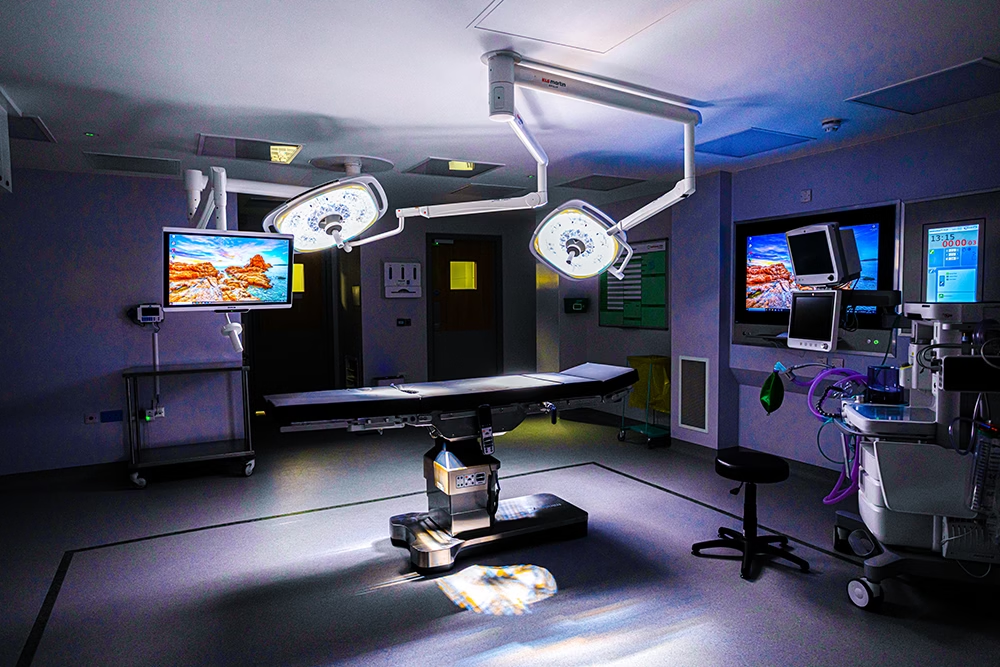
We utilise state-of-the-art diagnostic tools and minimally invasive procedures to ensure faster recovery and better outcomes. Procedures offered include:
Laparoscopic Surgery: Minimally invasive techniques for diagnosing and treating conditions like endometriosis, ovarian cysts, and fibroids.
Hysteroscopy: A non-invasive procedure to examine the uterus and address concerns like polyps or abnormal bleeding.
Colposcopy: In-depth examination of the cervix following an abnormal smear test.
Endometrial Ablation: Treatment for heavy periods (coming soon).
Microsuction ear wax removal (if needed during consultation for related issues).
A gynaecologist specialises in women’s health. You should see one for any persistent concern such as irregular periods, unusual discharge, or menopausal symptoms. A routine pelvic exam is performed to assess the health of your reproductive organs (cervix, vagina, uterus) and usually takes just a few minutes.
At Medicana Winchester, we believe in supporting women’s health beyond gynaecology. Our clinic offers access to expert consultants across disciplines where tailored care is crucial for women.
Your skin, the body’s largest organ, deserves specialised attention. Our experienced dermatologists provide a wide range of services, from treating common skin issues like acne, eczema, and psoriasis to diagnosing and managing skin cancer.
Advanced Diagnostics: We utilise advanced investigative techniques such as biopsies, surgical excisions, and dermatoscopy to ensure accurate diagnoses.
We offer diagnostic services to assess cardiac health, recognising that heart disease presents differently in women than in men. Expert consultation is available for preventive care and the management of symptoms that may be linked to hormonal changes or lifestyle.
Our services include consultation for urinary tract issues common in women, such as recurrent urinary tract infections (UTIs), incontinence, and other bladder or kidney-related concerns.


Consultant Obstetrician & Gynaecologist

Consultant Gynaecologist

Consultant Gynaecologist

Consultant Gynaecologist

Consultant Cardiologist

Consultant Dermatologist
MRCP, Specialty Certificate in Dermatology
Consultant Dermatologist

Consultant Dermatologist

Urology Consultant
A gynaecologist is a doctor specialising in women’s health. You should consider seeing a gynaecologist if you have any concerns that is disturbing you such as irregular periods, disturbing menstrual pain, unusual discharge, pain or bleeding after sex, or have concerns about fertility or menopause.
If you’re experiencing persistent ear ache, hearing loss, tinnitus (ringing in the ears), chronic sinus infections, nasal congestion, throat pain, difficulty swallowing, hoarseness, skin lesions, or a lump in your neck, it’s a good idea to consult an ENT specialist.
It is a routine check-up for women to assess the health of their reproductive organs, including the cervix, vagina, and uterus (womb). In the presence of a chaperone, the doctor or nurse will check the outside of your genital area to make sure everything looks healthy and perform an internal check including speculum examination to get a closer look at your cervix (the opening to your womb).
The speculum, a small device made of plastic or metal; to gently open your vaginal walls so they can see the cervix clearly. Subsequently, any genital swabs or cervical smear could be done.
It’s normal to feel a bit of pressure or discomfort during the exam, but it shouldn’t be painful. If at any point you feel pain, let the doctor or nurse know right away so they can adjust what they’re doing. The whole process usually takes just a few minutes. You might experience mild spotting (a bit of blood) after a smear test, but this should go away quickly.
Irregular periods can be caused by various factors, including stress, changes in weight, hormonal imbalances, ovarian cysts or conditions like polycystic ovary syndrome (PCOS). If you have irregular periods for more than a few months, it’s a good idea to consult a gynaecologist.
Severe menstrual pain, also known as dysmenorrhea, could be a sign of underlying conditions like endometriosis, adenomyosis or other pathology. If over-the-counter painkillers aren’t helping and the pain affects your daily life, it’s important to seek medical advice.
Endometriosis is a condition where tissue like the lining of the womb grows outside of it, causing pain, heavy periods, and sometimes fertility issues. If you suspect you may have endometriosis, it’s important to see a gynaecologist with interest in endometriosis for a proper diagnosis and treatment options.
Endometriosis is a condition where tissue like the lining of the womb grows outside of it, causing pain, heavy periods, and sometimes fertility issues. If you suspect you may have endometriosis, it’s important to see a gynaecologist with interest in endometriosis for a proper diagnosis and treatment options.
Ovarian cysts are fluid-filled sacs that can form on the ovaries. While they are usually harmless and resolve on their own, some cysts can cause bloating, pelvic pain, or difficulty with bowel movements. If you notice these symptoms, a gynaecologist may recommend an ultrasound to check for cysts.
A colposcopy is a procedure used to closely examine your cervix for any abnormal cells, often following an abnormal smear test. It’s a simple, outpatient procedure, and your doctor will explain the results and any next steps needed after the examination.
Fibroids are benign growths that develop in or around the womb. Some women experience no symptoms, but others may have heavy periods, pelvic pain, or difficulty becoming pregnant. Treatment depends on the size of the fibroids and your symptoms; it may include medication or surgery.
Menopause is a natural stage in a woman’s life, usually occurring between ages 45-55. Common symptoms include hot flushes, mood swings, night sweats, and irregular periods. If symptoms are severe, there are treatments like hormone replacement therapy (HRT) that can help manage them. It’s best to speak to your GP or gynaecologist about your options.
Vaginal dryness is common, particularly during menopause, but it can also occur at other times due to hormonal changes, stress, or certain medications. Using lubricants, vaginal moisturisers, or hormone therapy can help. If this is a persistent issue, speak to your gynaecologist.
Yes, many women see a gynaecologist before trying to conceive. A pre-pregnancy check-up can help assess your reproductive health and offer advice on optimising fertility. It’s also an opportunity to discuss any concerns, such as irregular cycles or previous miscarriages.
Unusual vaginal discharge, such as a change in colour, consistency, or a foul smell, can indicate an infection. If you notice unusual discharge, it’s important to see a GP or gynaecologist for a check-up.
Occasional mild pelvic pain can be normal, especially during ovulation or menstruation. However, persistent or severe pelvic pain may be a sign of conditions such as endometriosis, pelvic inflammatory disease, or ovarian cysts. If you experience ongoing pelvic pain, seek medical advice.
Vaginal bleeding after sex can sometimes occur due to friction or minor injuries, but if it happens frequently or is heavy, it’s important to see a gynaecologist.
To learn more about arranging your self-pay healthcare at Medicana Winchester Clinic, please don’t hesitate to contact us:
📞 Call us: +44 1962 587821
Stay informed about the latest health news and exclusive offers. Subscribe to our newsletter today!